
The Doctoral Journey
The road to a doctoral degree can be challenging to navigate. But it’s also exciting and highly rewarding. This easy-to-follow guide provides the information you need to know to get there, from enrollment and first steps to graduation and beyond.

WHY YOU'RE HERE
Choosing to pursue a doctoral degree is one of the most important decisions you’ll ever make.
You want this achievement as much as you’ve ever wanted anything in your life. But fear of the unknown and self-doubt may be holding you back. What’s the right school? What’s the right program? Are you really ready for the challenge? Can you make the time commitment? Can you make the grade? And do you have the stamina to make it through?
You’re not alone. Many students who have taken on this challenge have wrestled with the same questions.
Can you make your dream of earning a doctoral degree come true? You’ll never know unless you take the first steps.
This guide is a map of the process and an invitation to explore your options. It will show you what to expect at every stage of the doctoral experience, from choosing a program and taking courses online, to researching, writing, taking exams, and completing your final project.
You’ll also hear from graduates from various programs describing the doctoral experience in their own words. And you’ll learn why support and structure are critical to your success.
We’ve designed this guide to answer your questions as clearly and thoroughly as possible. Feel free to read it from start to finish, or skip to the chapters that most interest you.
Good luck on your journey.

Choose a Path
Some important decisions come early in the doctoral process. Here’s information to help you weigh all your options.
5 minutes
YOUR DEGREE OPTIONS
Enrolling in a doctoral program is one of the biggest decisions you’ll ever make. Choosing the right school, the right program, the right time to begin—there are so many critical aspects to consider. To get on the right path from the very beginning, it helps to start with the end in mind.
- What do you want to do after you graduate?
- Do you plan to use your degree in an academic or a non-academic setting?
- What type of degree is generally expected in your desired profession?
THE FIRST KEY CHOICE
There are two kinds of doctoral degrees: PhDs and professional doctorates. Deciding which is right for you depends, in part, on how you want to use your education, and the standards in your professional field. The kind of research that most interests you should also play a part in your decision.
Some people believe that a PhD prepares you to teach, while a professional doctorate is geared toward a professional career. That’s true in many cases, but it’s also an oversimplification. Leaders in many corporate and nonprofit roles hold PhDs, and many individuals with professional doctorates serve on college and university faculties. That’s why you need to think carefully about how you will use your doctoral degree as you advance your career.
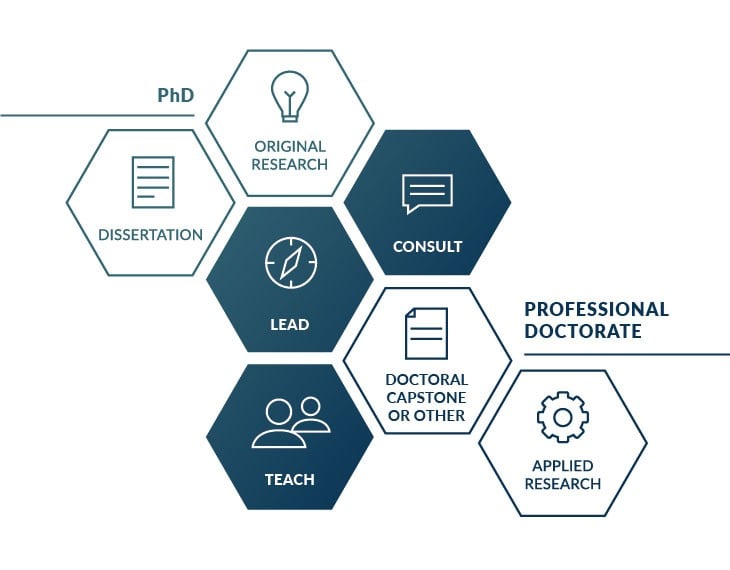
The main differences between PhDs and professional doctorates show up in two areas:
Research Focus: Original or Applied?
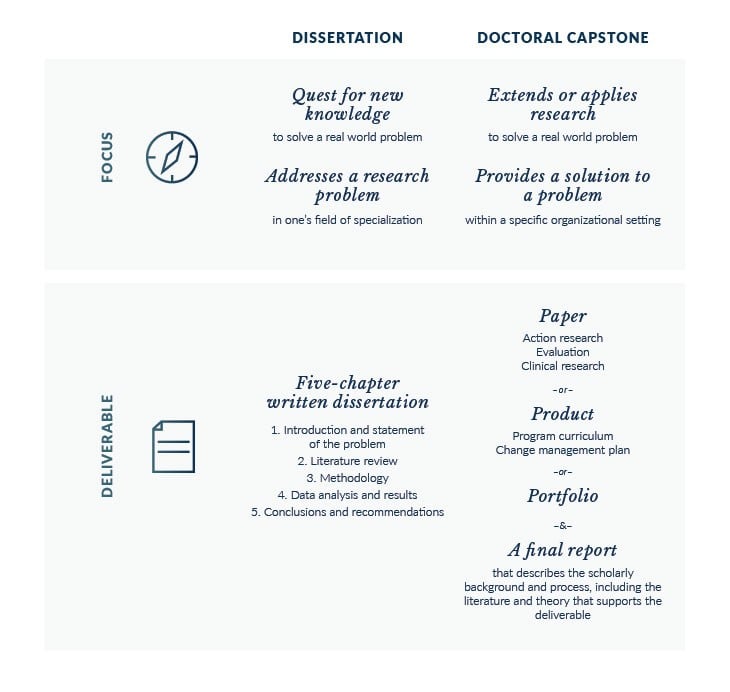
PhD students are expected to create, expand, and contribute to knowledge, research, and theory in their field of study. This kind of discovery is often called original research.
Professional Doctorate students are expected to expand and apply existing knowledge and research to existing problems in their professional field. This is often referred to as applied research.
Final Deliverable: Dissertation or Project?
PhD students summarize the findings of their research in a five-chapter paper called a dissertation. At completion, they must defend their work in front of a faculty committee. The dissertation is ultimately published and shared with other scholars in the field and the general public.
Professional Doctorate students present their research in one of a variety of forms including projects, portfolios, journal articles, or even dissertations. In some instances, students are required to defend their work in front of a faculty committee.
SUPPORT
Capella offers many resources to help you get started on your doctoral path, from understanding your degree options to selecting your program, and enrolling in your classes.
Enrollment specialists
These specialists can outline the differences between our PhD and professional doctorate programs and help you identify the specific program that meets your goals. They can also help you with the admissions process and financing.
Community and networking groups
Capella facilitates connections through LinkedIn and Facebook pages, the Capella University Open Forum, and closed discussion groups. Via Campus, Capella’s online hub of learning resources, you can interact with other program participants or learn from Capella alumni.
Career Center
Capella’s Career Center can help you with questions about whether to choose a PhD or a professional doctorate. Additionally, the center’s staff can assist you with investigating potential career paths after you get your degree.
CONTACT US
Learning online doesn't mean going it alone. Help is here. From faculty, coaches, advisors, and more. Plus a supportive community of students who are as passionate about their careers as you are about yours.
Call Us: 1.866.933.5901

Coursework
Taking courses in a doctoral program is a unique experience, and knowing what to expect offers a big advantage.
5 minutes
THE BEGINNING
Taking courses in a doctoral program will be challenging. You’ll be exploring topics at a level beyond what you’ve experienced in a master’s program. You’ll be juggling a busy schedule and spending a lot of time studying on your own. Let’s look at what the coursework phase of your online doctoral program will entail.
Through your coursework, you’ll develop skills to think more critically. You’ll learn to conduct research, analyze scholarly literature, and write clearly and with impact. These skills are vital to your success as you work on your final project, whether it’s a dissertation, a doctoral capstone, or something else.
WHAT TO EXPECT
Doctoral coursework—and the time it takes to complete it—varies by institution and academic discipline. Before you enroll in a program, you’ll want to get a solid understanding of how many classes are required and how many years the program typically takes. At Capella, most students are working adults with families, taking one course per 10-week period. Some may take two if they have additional time or want to move more quickly through the program.
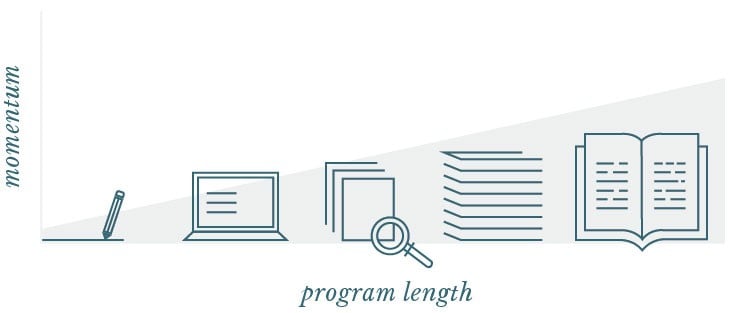
In many traditional doctoral programs, students typically wait until completing their coursework to begin the independent research or project phase of their degree; however at Capella, students start collecting materials for their final project early on. Focusing on the final project from the beginning gives students a leg up when they transition into self-guided research. Rather than starting from scratch, they already have a solid base of research to build on.
SUPPORT
Doctoral coursework is complex and challenging; Capella offers resources to help.
Faculty
Your instructors evaluate your performance as you navigate your coursework. They are experienced mentors who are familiar with the environments where you may someday work, and bring connections to the classroom.
Academic advisors
Your advising support team plays a key role in your success at Capella. Academic coaches provide personalized guidance, motivation, and strategies for navigating problems. They can recommend resources and solutions for any challenges you encounter.
Learning and study strategy tools
Campus, Capella’s online hub for student resources, has information and tutorials on managing your time, improving your writing, mastering APA style, setting up a study space, and troubleshooting technical issues. It’s available 24/7 to Capella students.
CONTACT US
Learning online doesn't mean going it alone. Help is here. From faculty, coaches, advisors, and more. Plus a supportive community of students who are as passionate about their careers as you are about yours.
Call Us: 1.866.933.5901

Research, Writing, and Critical Thinking
Doctoral work requires students to push the limits of their knowledge and understanding, and strive for excellence in these key areas.
7 minutes
FOUNDATION SKILLS
Many who consider a doctoral program are uncertain about their ability to conduct their own research and write at the doctoral level. You may share these feelings and wonder if you have what it takes to be successful. Knowing what to expect, and that you’re surrounded by structure and support can help you feel confident moving forward.
Students in undergraduate and master’s degree programs develop and deepen their understanding of the world by reading papers, books, and other materials. Doctoral students go one step further: rather than just studying existing research, they develop questions, methodologies, and studies that lead to exciting discoveries or new applications of research within their field.
As a doctoral student, you will be immersed in three key activities: research, writing, and critical thinking. Each component depends upon and informs the others. You’ll gather research and develop questions. Refining those questions and finding answers requires critical thinking. Communicating answers requires writing skills, and the process of writing unearths additional questions. Research begins anew to answer those questions, and critical thinking and writing follow.
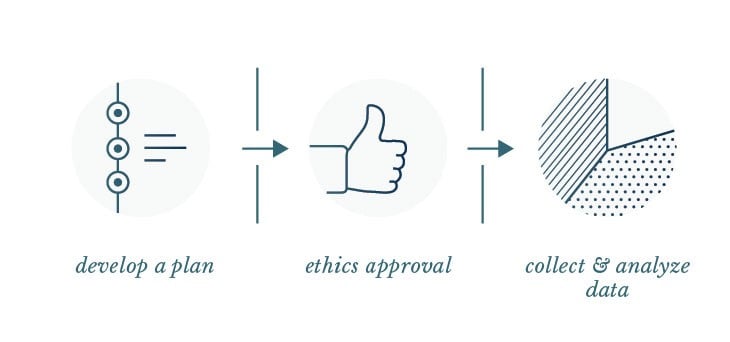
Developing a Plan
During this phase, you’ll decide on a topic for your doctoral project. You’ll read numerous articles, think critically about the research and theories in your field, and create an outline for your project. You’ll work closely with faculty mentors to refine your overall approach and methodologies. Careful attention to detail and strategy during this phase will help ensure that the results of your research are sound, rigorous, and useful.
Reviewing the Ethics of Your Project
Before embarking on your research, you must receive the approval of an Institutional Review Board (IRB). The IRB, which consists of faculty experts, makes sure you are adhering to federal and professional ethics standards in the collection and analysis of data.
Collecting and Analyzing Data
This phase takes many forms, depending on your area of focus. Doctoral students in education may gather data on the application or effectiveness of a pedagogical approach. A PhD candidate in business might survey employees about the factors that impact their leadership. Nursing students might apply theory in leading and managing in the health care environment.
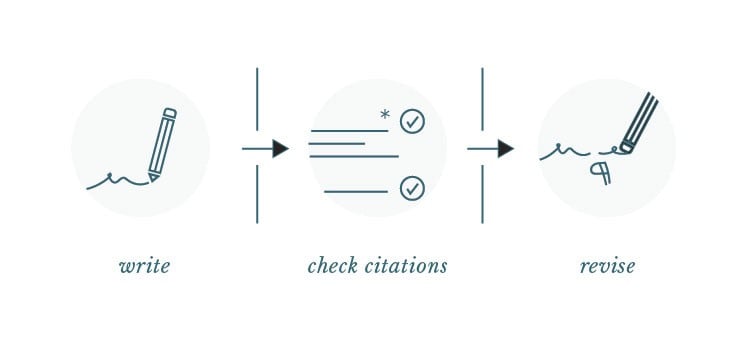
First Drafts and More
Most final projects for doctoral programs result in a publishable paper. PhDs write dissertations; professional doctorates may develop articles or written analyses. Regardless of the final project, all doctoral students in every discipline must develop solid writing skills.
At times you may feel overwhelmed about writing. You‘re not alone. Writing is a demanding practice that involves drafting, receiving feedback, revising, and proofreading. But if you embrace the process and use the resources available at your institution to continually improve your writing abilities, you’ll be successful.
Checking Citations
As an independent scholar, you will want to establish the academic integrity of your work. It’s critical that you appropriately credit the work of others and that your research and scholarship are based on ethical practices and sound principles. Even an honest error could have significant ramifications and must be avoided. Rest assured your courses, faculty, writing center, and IRB are here to support you along the way.
Making Revisions
As you enter the advanced phase of your doctoral program, you’ll spend more time revising and editing your work. Keep in mind that revision is much more than proofreading. It’s a process that ensures you’ve developed and supported your ideas, conveyed them convincingly, and addressed the appropriate audience. Even the most talented writers must revise and polish their work. It takes time, but it’s an integral part of the writing process, and can often be the most creative and rewarding.
Critical thinking is perhaps the most important skill that you’ll develop in the course of your doctoral studies. The core elements of critical thinking at the doctoral level involve the interpretation, analysis, evaluation, inference, and explanation of information.
A master’s can give you a deep understanding of a particular subject area, but doctoral work can help you make connections that are not always obvious. You will analyze and interpret different sources of information to draw your own conclusions—and learn to defend those conclusions with sound data and arguments.
SUPPORT
Capella provides students with access to materials and experts who can further their research, writing, and critical thinking skills.
Research Faculty
Capella’s doctoral faculty members are deeply committed to research and are specialists in their fields. They help students choose their topics and direct their research.
Writing Center
The writing center has the advanced information and hands-on practice material that doctoral students need to improve, shape, edit, and revise their writing, both during coursework and while engaged in their final project.
Library
Capella’s library has a wealth of books, articles, journals, and online databases. University librarians are readily available to answer questions.
CONTACT US
Learning online doesn't mean going it alone. Help is here. From faculty, coaches, advisors, and more. Plus a supportive community of students who are as passionate about their careers as you are about yours.
Call Us: 1.866.933.5901

Residency
Part of coursework, the residencies required of some doctoral programs offer an exciting chance to engage and connect with others in the discipline.
3 minutes
ESSENTIAL CONVERSATIONS
Going through a doctoral program at an online university is not a solitary process. To the contrary, interaction with peers and faculty is a key part of the experience.
To facilitate group discussions and one-on-one conversations with others in your chosen field, some online universities—like Capella—require doctoral students to participate in residencies and at Capella most programs are virtual residencies. Virtual residencies provide the direction, motivation, and detailed feedback that allow you to refine your focus, develop your research, and shape your final project.
Not all programs require virtual residencies—you’ll have to check if yours does. But truly worthwhile and rewarding.
WHAT TO EXPECT
During your virtual residencies, you are required to participate in synchronous sessions where you will meet one-on-one with faculty. You also have opportunities to interact with consultants from your school’s research and writing groups, along with members of the Institutional Review Board, which approves all research projects. During these virtual residencies, you can obtain many of the approvals you’ll need for research topics and methodologies. You’ll make significant progress in the early part of your program and gain confidence that you’re on the right track toward completing your degree.
The Content of Virtual Residency
Each experience will vary according to your program’s focus and requirements, but the following are examples of topics and skills covered:
- Identifying a research problem
- Examining and establishing potential topic areas
- Developing a literature review
- Crafting a well-formed research question
- Selecting the appropriate research methodology and design
- Developing a complete research plan
These experiences complement your coursework, and help you meet milestones as you develop a research plan for your dissertation or doctoral capstone project.
SUPPORT
Capella provides lots of resources during virtual residency experiences.
Faculty
Faculty mentors facilitate virtual residencies, guiding students as they identify their research focus and refine their questions and methodologies. The synchronous sessions deepen the connections between students and faculty.
Librarians
Few resources are as helpful to doctoral candidates as the Capella librarians, who know how to access countless articles, books, databases, and more. They participate in Capella virtual residencies and are accessible via email and phone to assist doctoral students.
CONTACT US
Learning online doesn't mean going it alone. Help is here. From faculty, coaches, advisors, and more. Plus a supportive community of students who are as passionate about their careers as you are about yours.
Call Us: 1.866.933.5901

The Comprehensive Exam
A rigorous test for PhD students as they move from coursework into the dissertation phase of the doctoral journey.
4 minutes
PREPARATION
One notable difference between PhD and professional doctorate programs is this: PhD students must pass a comprehensive exam before they can embark on the independent research phase of their doctoral journey. If you’re set on earning a professional doctorate instead of a PhD, feel free to skip to the next chapter of this guide.
The comprehensive exam can be a big hurdle for people in PhD programs. But the more prepared you are, the better you’ll perform. Your coursework will provide you with a firm foundation for the comprehensive exam, and that should give you confidence. Let’s understand the facts about comprehensive exams for doctoral students.
WHAT TO EXPECT
The nature of the comprehensive exam will vary by school and program. At some schools, comprehensive exams may involve an oral exam or a review of your academic portfolio. A common format is a written test, like the three-question examination that Capella uses. The questions vary, but they always assess the depth and breadth of your knowledge, particularly related to your dissertation topic.
Possible Requirements
- Maintaining a minimum GPA (at Capella University, a 3.0 GPA is required before taking the comprehensive exam)
- Completion of all coursework
- Completion of doctoral residency, if relevant to the program
- Possible additional requirements for students in licensure or practicum programs
What the Exam Involves
Faculty members are looking for verification that students are thoroughly grounded in their field and ready to begin their final project. To that end, comprehensive exam questions are usually focused on a set of fundamental questions.
- What are the important theories and concepts that contribute to the body of knowledge in the student’s area of specialization?
- What research methodologies are usually used?
- Are there applications of relevant theory and research that can solve problems in the field?
Students at Capella are given 28 days to complete the test. The exam is then graded by a team of faculty experts. At Capella, three instructors read the exam and provide a score and feedback.
Your coursework is designed to prepare you for the comprehensive exam. Success depends on your ability to stay motivated, manage anxiety and stress, develop and implement a plan for completing the exam, and manage your time. While completing the comprehensive exam is a significant milestone for every PhD student, you should feel confident that your hard work and the instruction provided by faculty members will give you the skills and knowledge you need to succeed.
SUPPORT
Capella offers unique support tools for students taking the comprehensive exam.
Comprehensive Examination Manual
To fully prepare students for the comprehensive examination, Capella publishes a manual that outlines the general test process, offers tips for success, and explains the grading protocols.
Library
Although students are forbidden from accessing outside resources while working on comprehensive exams, using the Capella library is not only allowed, it’s essential. Students have access to librarians, specialty publications, and online databases.
CONTACT US
Learning online doesn't mean going it alone. Help is here. From faculty, coaches, advisors, and more. Plus a supportive community of students who are as passionate about their careers as you are about yours.
Call Us: 1.866.933.5901

Final Project
Whether a dissertation or a doctoral capstone, your final project will be your most significant accomplishment.
5 minutes
PREPARATION
Completing a final project in a doctoral program will be one of the most challenging and rewarding experiences of your academic career. Contributing new knowledge or applications to your field of study is an important achievement, and it will take time, hard work, and perseverance.
Let’s have a look at the process and hear from those who have gone before you.
WHAT TO EXPECT
All doctoral degrees require students to complete a final project. Successfully finishing the final project demonstrates a student’s mastery of these key doctoral competencies:
- Research and scholarship
- Writing and communication
- Critical thinking
- Information literacy
- Ethics
For PhD candidates, the final project is a dissertation. Some professional doctorate programs also require students to complete a dissertation, but more often than not, such degrees culminate in a doctoral capstone.
Here’s how the two compare:
THE FINAL STEP
At the close of their program, doctoral students present their work to a committee of faculty experts.
For PhD students, the committee members ask questions about their work and approve the dissertation for publication. The questions can be challenging and probing—but after immersing themselves in research for so long, students are well prepared with detailed answers to the committee members’ questions. Once successfully completed, the dissertation is published and made accessible to others in the field.
Professional doctorate students at Capella also have their doctoral capstone reviewed by a faculty mentor and committee. The committee reviews the work to ensure it meets Capella’s expectations for style and rigor. Upon approval of the final project, a student is eligible to receive a doctoral degree.
SUPPORT
Capella offers plenty of resources for students as they complete their final projects.
Faculty
Capella instructors assist you at every step as you develop your final project. They evaluate your work, outline the process, guide you in submitting information to the IRB, and serve as your sounding board as you choose your committee.
Special Resources and Tools
You'll find a wealth of materials regarding the dissertation/doctoral capstone process on Campus, Capella’s online hub for learning resources, including a milestone guide, dissertation calculator, dissertation manual, and more.
Quantitative Skills Center
The center provides resources and live support in math, statistics, and other quantitative skill areas. Strengthening such skills can help boost your research, problem-solving, decision-making, and critical thinking abilities.
Writing Center
The writing center has the information and hands-on practice material that you need to shape, improve, and revise your writing both during your coursework and your final project.
CONTACT US
Learning online doesn't mean going it alone. Help is here. From faculty, coaches, advisors, and more. Plus a supportive community of students who are as passionate about their careers as you are about yours.
Call Us: 1.866.933.5901
Graduation
Obtaining your doctoral degree often brings a rush of personal pride. And what you do with it can significantly impact your career, an organization…maybe even the entire world.
3 minutes
A DAY TO CELEBRATE
By earning a doctoral degree you will have done something very special. Only a tiny fraction of the world’s population has achieved this level of academic distinction. And while you’ll most certainly celebrate your success, earning your degree is not the end. It’s the beginning.
Joining the elite group of scholars brings a feeling that‘s reserved for a select few, and the opportunity to become who you were always meant to be.
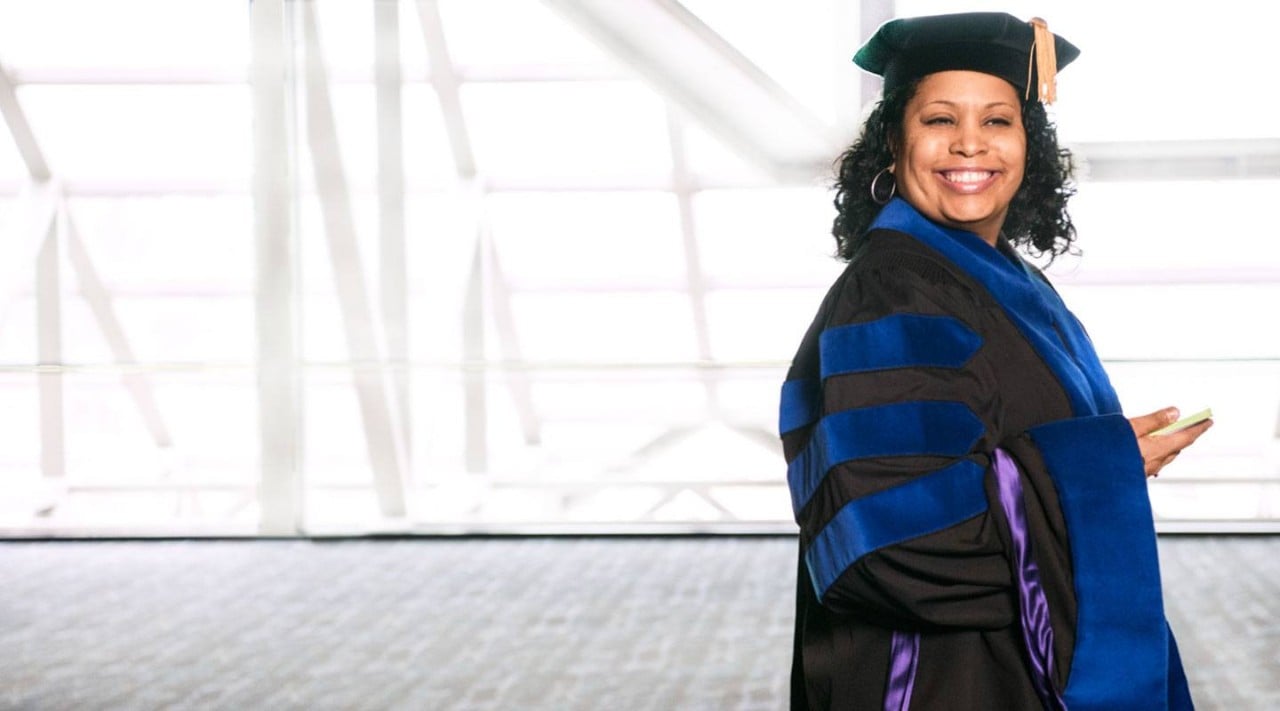
Commencement is a time for successful doctoral students and their guests to come together and mark the completion of the doctoral journey. It features the time-honored ceremony where a faculty member places a doctoral hood over the head of the graduate, symbolizing the transfer of knowledge from one generation to the next. The student has become a master, capable of teaching or sharing his or her expertise with others.
SUPPORT
Capella helps students celebrate their achievements and take their next career steps.
Career Center
Capella’s career center can help you with thoughtful and strategic career planning—from your first day at Capella, and long after you graduate.
Alumni Association
Once your degree is conferred, you become a member of Capella’s Alumni Association, which promotes connections among alumni and offers engagement opportunities and career support for professional development.
CONTACT US
Learning online doesn't mean going it alone. Help is here. From faculty, coaches, advisors, and more. Plus a supportive community of students who are as passionate about their careers as you are about yours.
Call Us: 1.866.933.5901

Getting Started
Eager to begin? Here’s what you need to know to get the ball rolling—from enrollment to financing your education.
3 minutes
ENROLLMENT
Think about what kind of education you want. How will you use it? How much time do you have to devote to learning? To calculate the return on investment of your education, you’ll need to be clear about your degree focus and the impact it could have on your earning potential.
Admission Into Your Doctoral Program
The requirements for applying to a doctoral program vary, according to the institution and program. Most institutions, including Capella, require an application with basic information. Some schools may require additional items, such as letters of recommendation, a resume, college or university transcripts, or a personal statement or essay.
FINANCING
Figuring out how to pay for your doctoral education can be challenging. But every year many people investigate and answer the questions that come with funding higher education. With the right information, you can guide yourself to smart decisions. Click here to find out more about financing your education.
GETTING ORIENTED
Capella’s online campus is your digital destination for all of your academic needs. From the home page, you can see recent activities and navigate to anywhere in the site—to your course, the library, and student support resources.
You’ll have the opportunity to get familiar with our courseroom during your University Orientation Seminar. Once your application is accepted, you’ll automatically be enrolled in Orientation, which you’ll complete before your first course begins.
SUPPORT
When it comes to choosing a program and enrollment, Capella offers numerous resources and easy-to-use tools.
Enrollment Specialist
Our enrollment specialists are experienced consultants who take the time to understand your interests and ambitions. They can help you select the best program for your goals, guide you through the admissions process, and answer your questions about financing your degree.
Financing Guide Download
Financing Ways to Save
Financial Aid Tips
CONTACT US
Learning online doesn't mean going it alone. Help is here. From faculty, coaches, advisors, and more. Plus a supportive community of students who are as passionate about their careers as you are about yours.
Call Us: 1.866.933.5901