
By: The Capella University Editorial Team with Irene Abrego Nicolet, PhD, NCSP, LSSP, Dean of the School of Social and Behavior Sciences
Reading Time: 10 minutes
Many of us go to work every day wishing we could make a bigger impact on others’ lives. People are facing more external pressures, demands and mental health challenges than ever before.
If you’re keen to deliver that support and start making a real difference, clinical psychology might be the right choice for you.
Clinical psychology combines science, therapy and problem-solving to guide individuals, families and groups through different challenges. Clinical psychology might offer the personal fulfillment and wide range of potential career opportunities you may be after.
Read on to find out what clinical psychology is, how to position yourself to become a clinical psychologist and how clinical psychology is different from other psychological sciences.
Clinical psychology involves working directly with clients to help diagnose, treat and manage their mental health problems. This work addresses a wide range of behavioral issues and mental disorders, including anxiety and depression, trauma recovery, child behavioral support, substance abuse, couples therapy and family therapy.
Clinical psychologists employ an evidence-based approach to apply various therapeutic techniques that support individuals, families and groups in need of assistance. Examples include developing and implementing plans for exposure therapy and cognitive behavioral therapy, supporting teachers and parents in designing behavior plans, leading conflict resolution, coping with chronic health problems and everything in between.
As with all health services, psychology requires collaboration. Practitioners combine various aspects and work closely with other professionals to promote healing, resilience and long-term well-being tailored to each client’s specific needs.
Clinical psychologists can specialize in areas such as child and adolescent psychology, adult psychology, forensic services, geropsychology and health psychology. Each focus area has its own methods, tools and strategies.
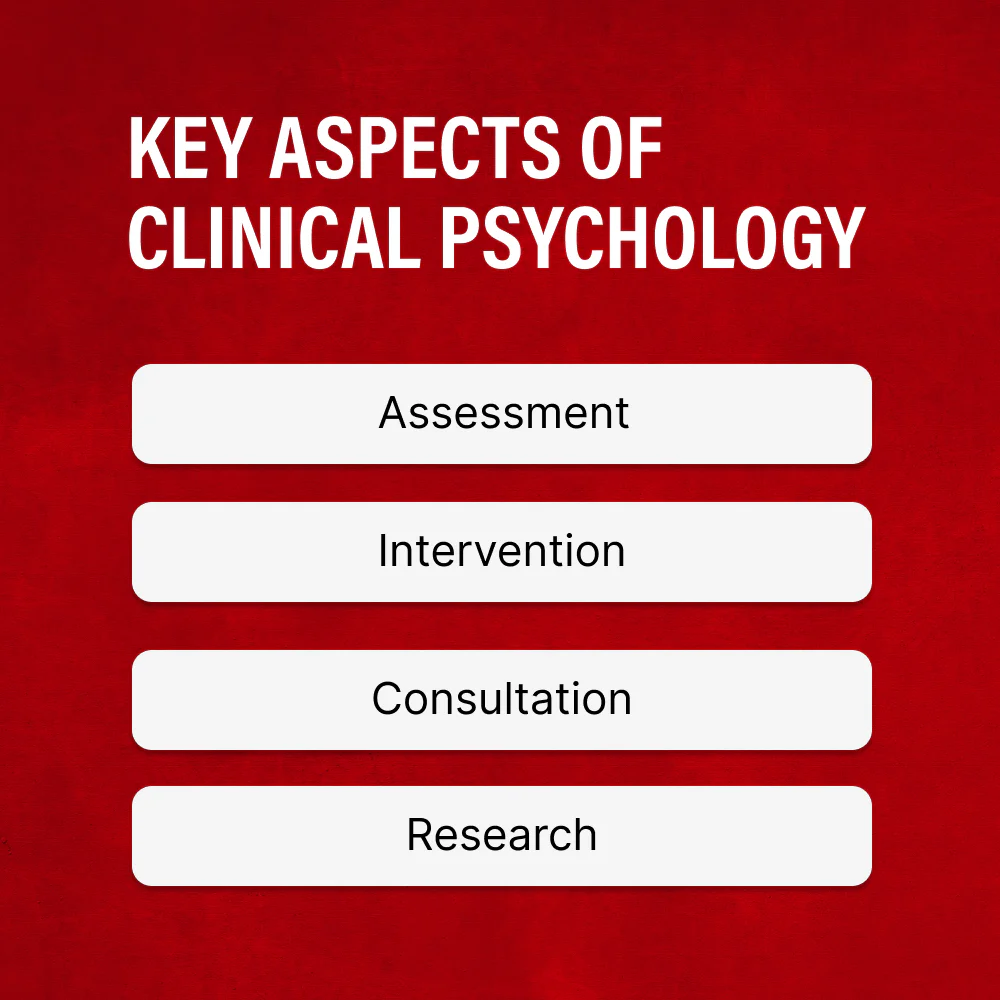
Regardless of specialization, all clinical psychologists build their practice around four key areas: assessment, intervention, consultation and research. These guide how they work with clients, collaborate with other health professionals and design therapies and support plans to improve well-being.
A comprehensive psychological assessment is often the starting point for a clinician’s work. Psychologists use interviews, observations and standardized tests to assess a client’s mental health and functioning.
These assessment tools provide valuable insights into underlying issues, clarify diagnoses and help inform a treatment plan. Accurate assessment is the foundation for personalized, evidence-based care. Once a condition is fully understood, psychologists can recommend and implement targeted interventions.
After clinical assessment, clinical psychologists use therapeutic interventions to support clients in addressing mental and behavioral challenges.
Approaches vary depending on individual needs and may include cognitive behavioral therapy, talk therapy, narrative therapy, family therapy or other evidence-based methods. The goal is to reduce symptoms, strengthen coping skills and support long-term emotional health and recovery.
Collaboration is central to clinical practice. Psychologists often consult with physicians, teachers, social workers and other professionals to provide coordinated care.
Through consultation, clinicians share expertise, align on strategies and ensure clients receive holistic support. This teamwork helps extend psychological insights into broader systems of care, which benefits individuals and communities.
Research is central to advancing the field of clinical psychology. Many psychologists conduct studies to test new therapies, explore causes of mental health conditions and evaluate treatment outcomes.
Collaborative research across disciplines helps build the scientific foundation for better interventions.
By connecting research and practice, clinical psychologists ensure patients benefit from the latest, most effective methods.
Clinical psychologists can advance by developing specialized expertise, starting private practices or working in hospitals, rehabilitation centers and other healthcare settings as part of multidisciplinary teams.
But for many professionals, the draw of clinical psychology goes beyond job growth or salary. It’s the opportunity to find purpose in work that changes lives.
If you’re looking for a career where you can make a direct, positive impact, clinical psychology could offer that fulfillment. You’ll work directly with people to help them overcome major challenges, build resilience and achieve healthier, more meaningful lives.
Clinical psychology is an incredibly exciting field, and there are multiple pathways you can take as your career progresses. But each of those pathways starts with a similar journey. You’ll need to develop core skills and knowledge, earn at least one academic degree and meet a number of state requirements for licensure before you can practice.
Whether you decide to pursue a path in clinical or applied psychology, there are many skills that can be used across various contexts. Some skills that are useful to develop include:
Don’t worry if you still have some work to do in these skill areas.
That’s part of the reason aspiring psychologists pursue a degree. In your program, you’ll be able to learn more about what it takes to be a clinical psychologist and find out how to develop and sharpen your skills to become a successful practitioner.
To begin pursuing a career as a practicing psychologist, you commonly need to start with a bachelor’s degree in psychology or a related field. From there, aspiring psychologists pursue a master’s or doctoral degree to meet licensure requirements and gain supervised clinical experience. In most jurisdictions, a license is required to practice, and most licenses are issued at the master’s and doctoral levels.
A master’s in clinical psychology helps you build the knowledge and skills to understand, assess and treat emotional, behavioral and mental health concerns. Programs emphasize psychological theory, evidence-based practice and research.
Most states require a doctoral degree (PhD or PsyD) to practice as a psychologist. An increasing number of states are also offering practice options to candidates with APA-approved master’s degrees. Check with your state’s licensing board.
At Capella University, students receive support from enrollment specialists, academic coaches and faculty throughout their program. The curriculum is designed to help you meet key prerequisites for doctoral-level study and prepare for professional licensure. Note that licensure standards vary across the U.S. and not all programs are offered to residents of every state, so be sure to review the requirements in your state or jurisdiction. Capella University cannot guarantee professional licensure, certification or endorsement.
You can choose from three specializations:
Capella’s clinical counseling program includes face-to-face residencies and supervised clinical training. Although states have different licensure requirements for clinical practice, residencies can help provide students with some clinical practice hours to help prepare for state licensure eligibility.
All of Capella’s clinical psychology programs are available in the GuidedPath learning format. This is a more structured way of learning with an active peer community and faculty guidance. That means you’re never on your own, and you can always call on support as you advance through your master’s and prepare to join the workforce or take the next step and go for doctoral study.
Most state licensing boards require you to become a doctor of psychology (PsyD) before you can become a practicing psychologist.
Doctoral programs like Doctor of Philosophy (PhD) and PsyD offer advanced research training, deeper clinical experience and prepare graduates for licensure as psychologists. To gain entry to a doctoral program, you’ll typically need a master’s degree in psychology or related field.
All of Capella’s psychology master’s programs include a competency-based curriculum that meets many prerequisites for PhD and PsyD programs. This simplifies your path to doctoral study and may help you get over the finish line.
To work in the field of clinical psychology, you’re required to get a license to practice. Licenses are issued at the state level, and each state has its own different requirements for licensure.
In general, to be eligible to apply for a license in field of clinical psychology, you’ll need:
The application processes and costs vary. If in doubt, get in touch with your state psychology licensing board in the jurisdiction where you plan to practice. Learn more about licensing requirements.
The human mind is complex, which is why psychology includes many specialized branches. Each field offers a different focus and attracts students with unique goals.
Before choosing a specialization, it helps to understand how each area applies psychological principles in practice.
Here’s a look at how clinical psychology, applied psychology and counseling psychology differ, and how each supports people’s mental and emotional well-being.
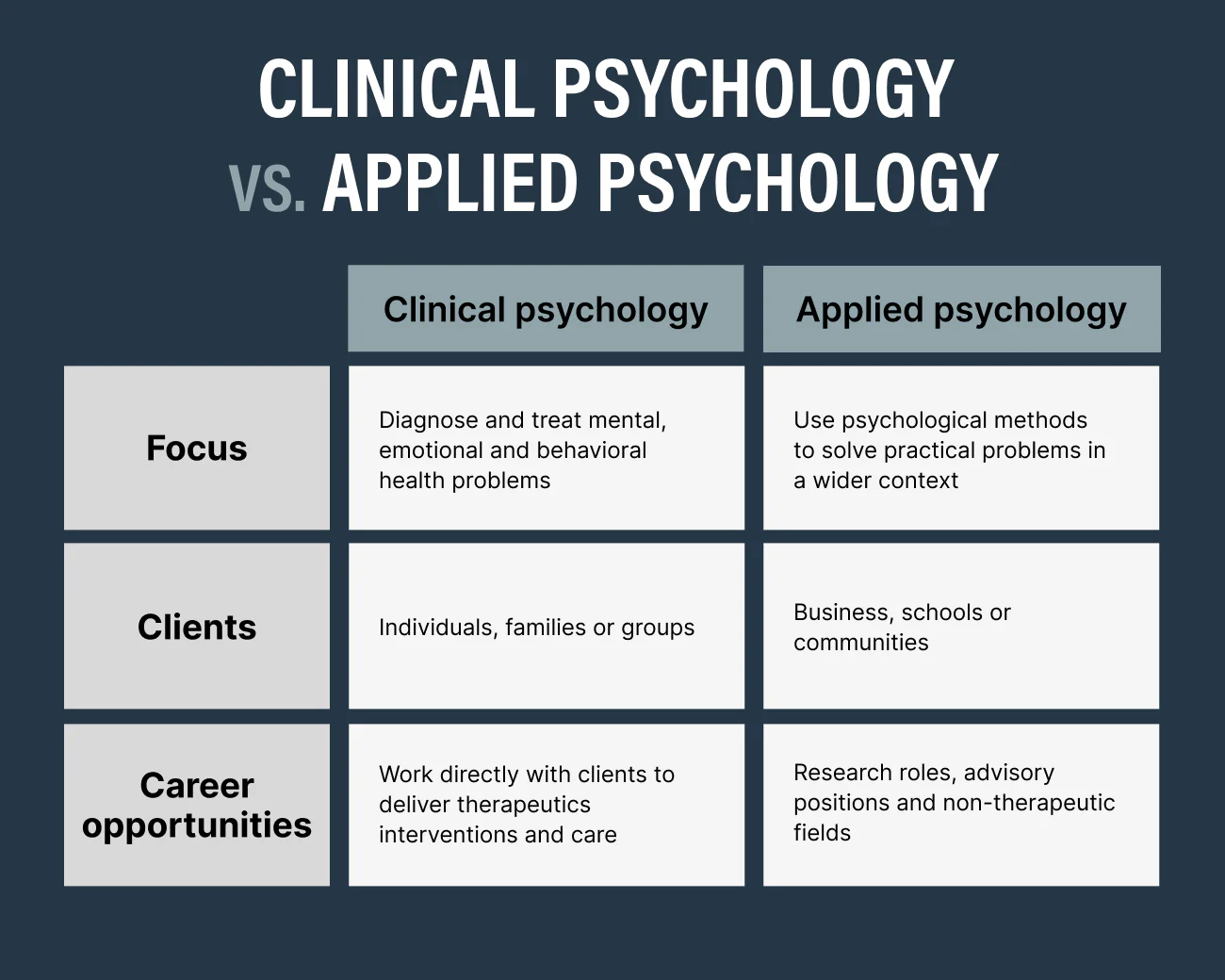
Applied psychology draws on insights and knowledge from psychology and typically involves research, teaching or consulting with people, organizations or systems. While professionals in this field may work with clients, it isn’t in a therapeutic context. Their work relies heavily on understanding human behavior and psychological processes. Clinical psychology practice requires a state license to offer services to the public.
Students in applied psychology programs participate in research to study how the mind works, the development of humans throughout their lives, and how changing conditions in communities might affect different populations.
Both clinical and applied psychology will generally have an overlapping group of core courses such as multicultural topics, ethics, biological basis of behavior, lifespan development, statistics and research methods.
Clinical psychology typically includes courses focused on psychotherapy, psychopathology, therapy and psychological assessment tools. Depending on the area of focus, the curriculum could include clinical application of skills as well as practicum and internship.
Applied psychology would usually include courses focused on research skills, psychological theories, as well as courses specific to one’s area of focus, like pursuing a specialization in industrial and organizational psychology.
The choice between clinical and applied psychology should be guided by your interests in working directly with individuals in mental health contexts versus applying psychological principles in broader areas.
Clinical psychology is for those who are passionate about therapeutic interventions and direct patient care. In contrast, applied psychology appeals to those interested in research, advisory roles and applying psychology to nontherapeutic fields.
Both paths offer rewarding opportunities to explore the complexities of human behavior and help others.
Clinical psychology and counseling psychology share many similarities, but they differ in focus and approach.
Clinical psychology centers on the assessment, diagnosis and treatment of mental illness and complex emotional or behavioral disorders. Clinical psychologists often work with individuals experiencing more severe conditions and integrate medical perspectives into their therapeutic practice.
Counseling psychology, on the other hand, focuses on helping people navigate everyday challenges, personal growth and life transitions. Counseling psychologists take a holistic, strengths-based approach that emphasizes development and well-being.
Training in clinical psychology places more emphasis on mental illness and assessment, while counseling psychology programs focus on development and wellness. Both cover core areas such as human behavior, ethics, assessment and therapeutic methods.
Because clinical psychology is more medically oriented, practitioners usually need a doctoral degree (PhD or PsyD) and supervised clinical experience to qualify for licensure. Many states, however, allow individuals with a master’s degree to become licensed counselors.
If you’re interested in a counseling career that also builds clinical expertise, Capella University’s MS in Clinical Psychology offers a specialization in clinical counseling that may help prepare you to be eligible to apply for professional licensure in some jurisdictions. An increasing number of states are creating licensing pathways for individuals with APA-approved master's degrees, such as Capella's MC CPCC. Check with your state's licensing board for eligibility.
Wondering which psychology field is right for you? Here’s a guide to psychology areas you can explore.
Clinical psychology offers a meaningful career path where you can help people understand and overcome life’s challenges. Using a holistic approach, clinical psychologists use a range of specialist skills to provide a lifeline to families, groups and individuals who are struggling with their mental health.
If you’re ready to follow this pathway, your journey may start with education.
Earning a master’s in clinical psychology helps you develop the advanced knowledge and clinical skills needed to pursue doctoral study and professional licensure.
A doctorate in clinical psychology is usually a PhD or PsyD, not a Doctor of Medicine (MD). Clinical psychologists focus on therapy, assessment and research. MDs can prescribe medication and must attend medical school. In some states, psychologists with a post-doctoral master’s degree in psychopharmacology can also prescribe medication.
Clinical psychology can be a challenging major because it includes rigorous coursework, research and training. That’s why it may be important to choose a program that offers flexibility, a range of specializations and expert support to guide you as you progress through your studies.
Clinical psychologists help anyone struggling with mental health, emotional or behavioral challenges to promote well-being and personal growth. This includes individuals, families and groups.

We've received your message and will get back to you soon.